
Technology serves people.
Tools are not the goal. They exist to empower, enable, and elevate human capability.
Tools are not the goal. They exist to empower, enable, and elevate human capability.
Purpose gives direction. We apply our skills and compassion to advance meaningful missions.
Every mission creates impact. We build solutions that strengthen, support, and uplift the communities we are part of.
Strong communities sustain culture, knowledge, and freedom. They are the foundation of a resilient and enduring civilization.
Accelerators turn over every few months and the open models turn over faster, so the honest recommendation moves with them. Anyone selling you a fixed product is selling their inventory, not your answer. So there's no catalog and no standing recommendation here: the recommendation doesn't exist until Discovery has shown what you do. Then we configure and deploy whatever serves it, any hardware, any open-weight model, any data server rack.
That runs from a large estate on rack-mounted accelerators down to a small shop with a couple of desktop-class machines and a few laptops. Both are real answers, neither is the upsell, and both get built with room to grow. Own the gear already? We'll wire it, air-gap it, and hand it to your team the same way.
New to this? The FAQ and resource library cover deployment, models, and compliance in plain language.
That's the chain of command this company runs on, and technology is at the bottom of it. Nothing in the chain runs the other way. The whole point of view is written down, versioned, and public.
Read the Island Mountain Doctrine →


Renting intelligence from someone else's data center turned your most sensitive work into their liability. We move the whole stack onto your floor: silicon, runtime, an open-weight model you keep, and the governance that holds it accountable. Every layer swappable, none of it metered.
An intense stretch on-site with your senior people, managers, and founders. No discovery deck. We learn the work the way you run it.
We map the use-cases already sitting latent in your organization. Most of them nobody has said out loud yet.
We recommend the stack purchase for what Discovery turned up, then we deploy and configure it together, on-site, with room to grow.
We onboard your team to workflows and agentic orchestration built for your vertical. A deployment nobody can operate is a very expensive shelf.
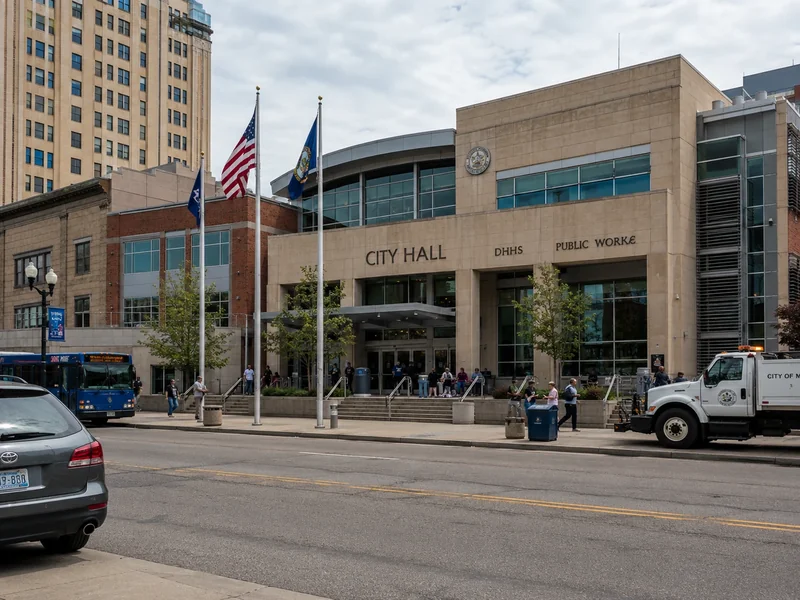

Resident records, cases, and PII stay on municipal premises.
Explore

Sovereign data stays on sovereign land, under your own jurisdiction.
Explore

Research and student records stay on campus, not in the cloud.
Explore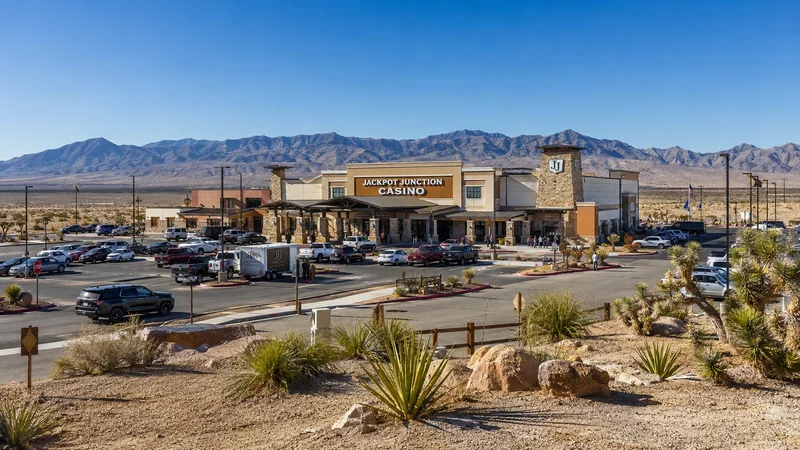

Player and surveillance data never leave the property.
ExploreThe senior surveillance lead notices what the alerting system doesn’t know how to name. A pause running slightly long. A route through the floor that’s technically ordinary and completely wrong. Two innocent actions made meaningful by their order. That judgment took thousands of quiet hours to build, and when she retires it walks out the door, which is why institutions ask me about capturing it.
Read →It’s 2:13 a.m. on an invented Tuesday, and a transaction pattern just crossed a threshold. Follow the alert and you’ll see where AI belongs in casino AML work, and where it absolutely doesn’t.
Read →Read seven clauses before you believe a region selector, because data location and data custody aren’t the same thing. A service can store your records in the region you picked while another company’s still running the platform, holding the administrator plane, and answering the legal process.
Read →I love it when the nay-hater brigade gets awful quiet. Six months ago throughput without frontier LLMs at any reasonable price was literally impossible. But boy howdy how things have changed. Rich Sutton said it best on a recent Training Data podcast, "I'm not weird; everyone else is."
Read →A tribal nation is a sovereign government, not a vertical market, and I’ve watched that single fact reorder every technical question an AI project thought it had already answered.
Read →If your company's "revenue" is really account teams moving money around in enterprise license agreements due to incentivization goal posts set up by management in-house, then the entire organization is part and parcel to a much larger problem whose way has been paved by dishonest bookkeeping practices - likely in the stark absence of federal or even state regulation.
Read →To the CIO who just discovered forty browser tabs of unapproved AI:
Read →Before the arrival date gets scheduled, I want the departure test written.
Read →There’s a one-page artifact we ask for before any sizing conversation, and I’d rather show it than describe it. A load profile, filled in for an imaginary but typical institution:
Read →“We signed the BAA, so we’re covered.”
Read →It’s 4:47 on a Friday afternoon. Run the tape forward with me; the scenario is invented, the mechanics aren’t.
Read →Discovery at Island Mountain runs under six clauses, and we hold every engagement to them. A sales process that can’t fail can’t be trusted, so these exist to make failure possible.
Read →“Training is the tour at the end, right?”
Read →Measure the building before you sign for the machine.
Read →To the compliance officer who just heard there’s an AI pilot starting:
Read →"Buy the biggest box your budget allows. You'll grow into it." I'd like to argue with that in public. Headroom you can't justify bills for power, cooling, and attention from day one, and a maximum-capacity default often hides discovery nobody did. Size from the work, and the honest answer is frequently a smaller machine than the buyer expected.
Read →You switched to small models to cut the inference bill and nothing moved, because the cost was never in the calls. It's in the servers, one reserved GPU per model, billed whether traffic arrives or not. Superlinked's open-source SIE serves 85-plus models from one process that loads and evicts by traffic, so a single card runs a rotating working set instead of sitting idle behind one model.
Read →Every retirement is a library that burns. The tacit expertise that never made the SOP is the part that hurts to lose, and it walks out the door on a schedule you can already see. AI changes the arithmetic by capturing the work in working form while the expert still runs it, owned by the institution and built to preserve expertise, not to police the people who hold it.
Read →Factories met electricity by bolting one giant motor onto the old line shafts, and output didn't much notice; the gains waited four decades for unit drive and redesigned floors. A chatbot subscription over an unchanged workflow is the same play, on a capability curve that compounds in months. Treating AI as a chatbot you subscribe to is meeting electricity and concluding the product is lamps.
Read →TA488's payload never needed privileges of its own. It inherited an authenticated Zimbra session, made only legitimate API calls, and minted itself an app-specific password that survives a password reset. A process with human session authority that provisions its own durable credential is the default shape of an AI agent.
Read →PrismML rounded a 27B multimodal model down to 1.125 bits per weight: 3.9 GB, phone-resident, 90 percent of its benchmark average intact, Apache 2.0. The floor under private multimodal AI just dropped again, and the category table says the deepest cuts land exactly where agentic work lives.
Read →Long-running agents accumulate workarounds, retry policies, fallback paths, and defensive heuristics until operational history starts rewriting behavior. The case for an immutable Hour Zero, adaptation receipts, and behavioral fingerprints.
Read →The companies pulling away in the AI race aren't necessarily choosing better models; their orgs are learning faster. Forward Deployed Engineering is less a software discipline than an educational one - a good deployment leaves behind a team that thinks differently. Field Notes No. 001, infographic included.
Read →Anthropic's platform team went on camera and read you the next year of agents: their own service accounts, agent-to-agent MCP traffic, scaffolding deleted, ambient execution, work you order with a budget attached. Every item on that list quietly moves a security control out of the model and into infrastructure. The only question left is whose building it sits in.
Read →Palantir and NVIDIA went sovereign on open models, and the industry's loudest voices are suddenly preaching open source. Good. Now comes the money-where-your-mouth-is part: an independent, American, frontier-cadence open-weight lab with no meter attached.
Read →Two DGX Sparks hold 256GB for the price of one RTX PRO 6000 Blackwell, and still generate tokens 6 to 7 times slower per stream. Where Spark and AMD's Strix Halo genuinely win, where they fall over, and the honest sizing call, including for hardware you already own.
Read →Anthropic rewrote Bun from Zig to Rust: 64 parallel Claude agents, 11 days, roughly $165,000 in tokens at API pricing. They never paid it; they own the infrastructure. What the labs' own economics admit about token billing, and what owning inference looks like at your scale.
Read →The word harness comes from draft animals we couldn't trust with the route. As the models earn it, the scaffolding gives way to a saddle, and the controls that hold, identity, egress, metering, audit, a kill switch, move off the animal and into the paddock. The only question left is whose paddock.
Read →An animated five-layer map of how AI agents plan, delegate, and act, and how they get attacked. Orchestration patterns, tool trust boundaries, agentjacking, the lethal trifecta, and the deterministic controls that break each attack.
Read →A single fake Sentry error report hijacked the AI coding agent inside a $250 billion Fortune 100 company and more than 100 other organizations. No breach, no stolen credentials. Air-gapped hardware closes the cloud exfiltration category. It does not close an agent that can't tell trusted data from an instruction.
Read →AI search summaries are rewriting who gets found. Three years of production on-premises AI experience, turned on the visibility question itself: why AI answer engines cite what they cite, and what most consultants still get wrong.
Read →Put your phone in airplane mode and the LLM keeps running. Apple, Google, memristors, and quantized MoE models are collapsing the distance between inference and the device in your pocket. The same sovereignty argument Island Mountain makes at rack scale, now at pocket scale.
Read →On June 3, 2026, the EU published the Cloud and AI Development Act, defining four sovereignty tiers for AI infrastructure. The highest tier blocks any provider subject to the U.S. CLOUD Act. Here is what that framework reveals about every regulated industry in America.
Read →Over 100 hyperscale data center projects proposed on tribal lands. The Seminole Nation voted 24-0 for a moratorium. The Muscogee Nation rejected a facility on food sovereignty land. The question every tribe needs to answer: landlord or owner?
Read →A 100-person company burning $50,000 a month on Claude tokens can replace that spend with on-premise hardware it owns. Break-even in under two months. Five-year savings exceeding $3.5 million. Here is the math.
Read →NERC Level 3 alerts, data centers draining aquifers, and 399 billion gallons of water consumed annually. Local AI inference is the responsible path forward for organizations that refuse to subsidize the cloud.
Read →A developer ran Qwen3.6-35B on a MacBook Pro and documented every limitation honestly. Speed, context depth, quality variance. Dedicated on-premise inference hardware solves each one today, whatever silicon the job calls for.
Read →The CEO of Hugging Face ran a 27B model on a laptop in airplane mode and called it the second revolution of AI. For regulated industries paying per-token fees to process sensitive data on someone else's servers, this revolution has been a long time coming.
Read →The shadowing, the translation, the build: Basho Parks does all three. Nobody hands your workflow notes to a delivery team who never met your staff. No support tickets. No call centers. One engineer, one phone call, real answers.
Being on-site caps how many deployments run at once. Claiming a slot costs nothing and commits you to nothing. It holds your place in the queue, and any quote we scope together is locked for 90 days, GPU market be damned.
Claim a Build Slot No deposit · No commitmentNo sales pitch. Tell us what the work looks like and we'll tell you straight whether we can help.
Or call directly: 1-341-441-8740
It all connects: the answers and resources to get you deploying.

Straight answers on what a deployment looks like, how long we're on-site, model selection, air-gapping, and what you end up owning.
Read the FAQ →
Direct-answer briefs on air-gapped inference, HIPAA, ITAR/CMMC, the CLOUD Act, and on-premises AI cost.
Browse resources →
Tell us whose desk the work runs through. One engineer, one phone call, real answers, no sales pitch.
Start a scoping call →