So how would it live in a language model? The knowledge that decides whether a deployment works has been in someone's hands for fifteen or twenty years. It isn't written down anywhere you can point a retrieval pipeline at. The only way to get it is to go sit with the person who has it.
The last twenty-five months of confident proselytizing from tech CEOs implied that expertise like this is easy to replicate. It isn't. Watching someone do a job they've done for two decades is worth more than any amount of requirements gathering, and it's the part almost nobody budgets for.
Every industry has them, and every job classification has its own version: the person who has run this particular work for fifteen or twenty years and carries the whole thing in their head. Some of who we've sat with, and who we expect to:
The list doesn't end, and it isn't ours to write. Yours are already on payroll, and the most essential window in a deployment opens while we're sitting next to one of them. That's the part you can't outsource, can't shortcut, and can't buy in a box.
An intense stretch on-site with senior employees, managers, and founders. We watch the work run: its cadence, its battle rhythms, the workarounds nobody documented.
We map the use-cases and applications already latent in the organization. Most of them nobody has articulated yet, and a few of them are the whole reason to do this.
We recommend the stack purchase for what Discovery turned up, then we deploy and configure it together, on-site. Any hardware, any open-weight model, any data server rack, with room to grow.
We onboard your team to workflows and agentic orchestration built for your vertical and for what you sell, because a deployment nobody can run is a very expensive shelf.
Those four movements are the engagement view of a longer discipline: a seven-phase method that runs Observe, Listen, Map, Prototype, Deploy, Institutionalize, Depart, with Discovery as the gate nothing gets recommended or priced before. The doctrine spells out each phase and the specific failure it exists to prevent.
Chapter 8: The Island Mountain Method →Real installs from validated deployment patterns: the Secure Departmental Node, the Sovereign Workgroup Stack, the Regulated AI Infrastructure Pod. Discovery selects the pattern; benchmarks, governance requirements, and the facility survey finalize the build. Every deployment passes a repeatable acceptance test and ships with an evidence package.
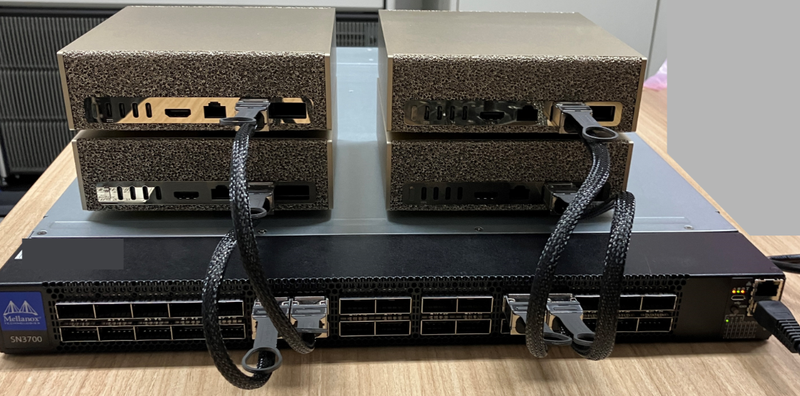
Four DGX Sparks on their own switched fabric. The development and pilot on-ramp, delivered.
Built by hand, run by the institution that owns it. Frontier-class open weights on owned silicon.
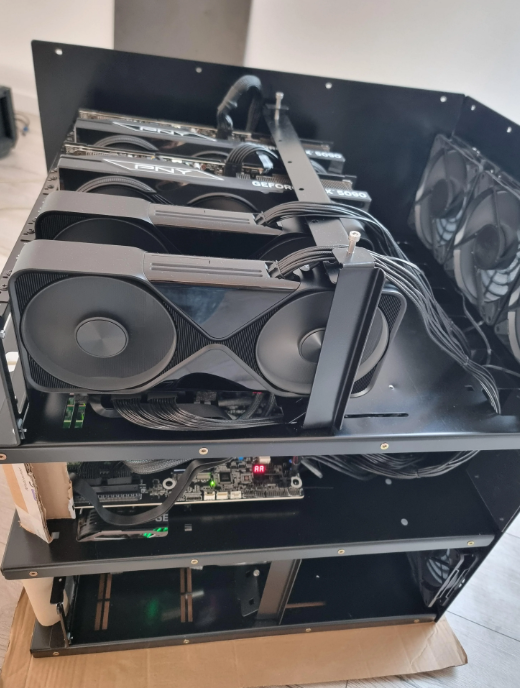
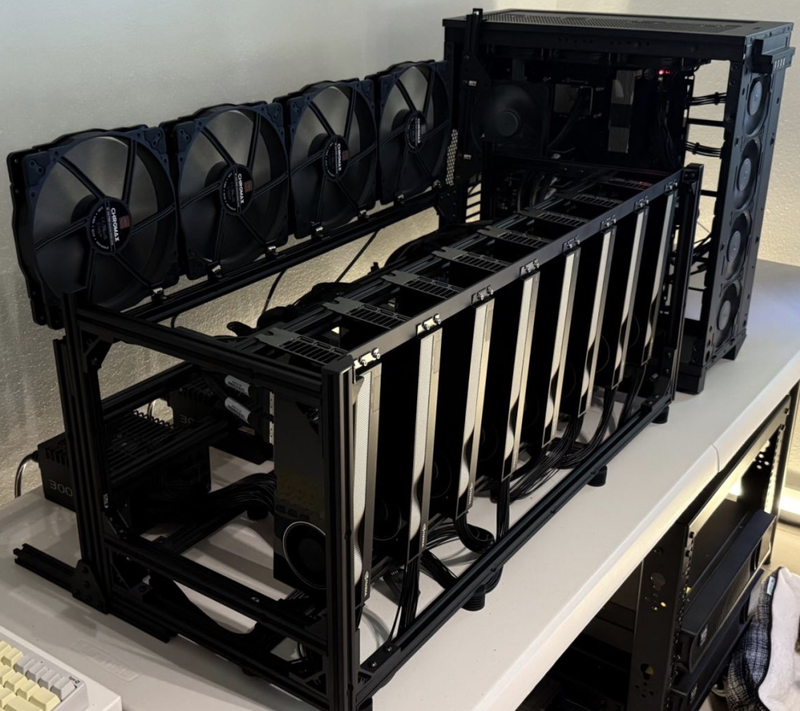
Eight RTX PRO 6000s, a dedicated fan wall, and room to grow. Sized by the workload it serves.
Discovery decides which pattern is yours. Here's what has to be on the table:
How many people touch it, how often, and whether they're all hitting it at once. Concurrency moves the answer further than anything else here, and it's the thing nobody guesses right over the phone.
Regulated data sets the air-gap posture, and the posture shapes the deployment. That's the constraint you can't design around later. A workload that can never see a network is a different build from one that just prefers not to.
Power, cooling, network, and where a rack can physically live. It's the question that sinks more deployments than any spec sheet. Facilities gets a veto, and it's a great deal cheaper to hear it before anything is ordered than after it arrives.
Then we recommend the stack purchase, and we deploy and configure it together, in your building. After that we onboard your team to the workflows and agentic orchestration built for your vertical and for what you sell, because a deployment nobody can run is a very expensive shelf.
Accelerators turn over every few months and the open models turn over faster, so the honest recommendation changes with them. That's the pace of the field, not a knock on it, and it's why we'd rather match the moment than defend a catalog. Anyone still selling you a fixed product is protecting their inventory, not solving your problem. A $7,000 laptop runs open-weight models in the frontier weight class now. The substrate stopped being the constraint, and what's left is whether anyone bothered to learn how your organization runs.
So there's no inventory here and no price list. The recommendation comes out of Discovery, drawn from validated deployment patterns and right-sized to what Discovery found. Then we configure and deploy the pattern that serves it, and we tell you plainly when professional accelerators are the right call and when they'd be overkill.
A small business doing genuinely useful work on a couple of desktop-class machines and a few laptops sits at one end, and it isn't a lesser answer. A large estate on rack-mounted accelerators with adjacent data server racks, feeding several departments at once, sits at the other. Neither one is the upsell, and there's no ladder between them that anybody gets walked up.
What doesn't change across that spread: it's yours outright, it's air-gap capable, the models are open-weight and swappable, and the Woven Security & Governance Fabric is in the crate either way. When professional accelerators are the right call we'll say so and explain why, and when they're overkill for what Discovery found, we'll say that instead. Every deployment gets built with room to grow, because the alternative is buying twice.
Handing someone a working system and a login is how organizations end up with an expensive machine that three people use for email drafts. The last stretch of a deployment is where the workflows get built, and it's the stretch that decides whether any of the rest of it mattered.
What gets built is specific to you. Not “here's how to prompt an AI,” but the actual workflows your people run, wired end to end: the intake that used to take a paralegal an afternoon, the after-action report that never gets written because the incident is over and everyone's exhausted, the compliance review that three people touch and nobody owns. Those come out of Discovery, which is why Discovery happens first.
Then the agentic orchestration on top of them: multi-step work that runs without a person babysitting each hop, with every action carrying an identity, an approval, and a receipt. Built for your vertical and for what you sell or do, because a workflow designed for a law firm is the wrong shape for a tribal emergency operations center, and both are the wrong shape for a casino's compliance desk.
We do this part ourselves, same as every other part. When we leave, the people who run the work can change the workflows without calling anyone, which is the only definition of a successful deployment worth using.
A system shaped around how someone already works gets used. A system that ignores them gets quietly routed around until it's shelfware with a budget line. That's the whole difference, and it gets decided in week one, not at go-live.
What stays behind when we leave: an independent on-site deployment your organization owns outright, the Woven Security & Governance Fabric holding every action to an identity and a receipt, and a team that understands the thing well enough to change it. More on that last part in Education Is the Deployment.
DGX Sparks on a lab bench, an AMD Strix Halo mini PC, a rack another integrator shipped and never configured: the hardware is rarely the problem. We wire the serving stack, set the air-gap configuration, and train your team on gear we didn't sell, because on-premises AI failing in regulated industries helps nobody. Read the honest small-box comparison, then tell us what's on your bench.
Start a Scoping CallInstant. Inference runs on your own GPUs, so tokens stream back at wire speed - no cloud round-trip, no queue, no latency. Immediate answers, hyper-localized to your rack.
Discovery decides it. Nobody can tell you what to buy before knowing what you'd use it for, so we sit with the people who run the work until we know it, and the recommendation falls out of that.
Yes, and everything gets built with room to grow, because the alternative is buying twice. You add capacity as the work grows instead of replacing what you already own.
Being on-site caps how many deployments run at once. A slot costs nothing, commits you to nothing, and locks the quote we scope together for 90 days.
Claim a Build SlotNo deposit · No commitment
The stack is the easy half. Here's the work that decides whether it lands.
Straight answers on what a deployment looks like, how long we're on-site, model selection, air-gapping, and what you end up owning.
Read the FAQ →Direct-answer briefs on air-gapped inference, HIPAA, ITAR/CMMC, the CLOUD Act, and on-premises AI cost.
Browse resources →Tell us whose desk the work runs through. One engineer, one phone call, real answers.
Start a scoping call →Tell us whose desk the work runs through and what hurts about it. One conversation, no sales pitch, and a straight answer about whether we can help.
Start a Scoping CallOr call directly: 1-341-441-8740